
Quick Tips
- 53% of hosting providers surveyed say AI-driven automation will have the biggest impact on the hosting industry in 2026.
- Predictive systems can prepare infrastructure for expected traffic increases before servers become overloaded.
- AI can monitor hardware telemetry and identify signs of potential component failures before they turn into outages.
- Hosting providers are also using AI for security monitoring, support automation, website creation, and data-center efficiency.
Artificial intelligence is becoming a much bigger part of web hosting, even though most customers rarely see it.
When you log in to a hosting dashboard, the most obvious AI features might be a chatbot, an AI website builder, or an automated setup assistant. But many of the more important applications operate quietly behind the scenes.
Hosting companies are using machine learning and automation to manage infrastructure, anticipate traffic, monitor hardware, detect suspicious activity, improve support, and optimize data-center operations.
A 2026 Web Hosting Trends Report based on 446 hosting providers found that 53% expect AI-driven automation and AI products to have the biggest impact on the industry in 2026.
Here are the main ways AI is changing modern web hosting.
Predictive Scaling Can Prepare for Traffic Spikes
Traditional server scaling generally responds after resource usage starts increasing. A server reaches a certain CPU or memory threshold, an alert is triggered, and additional capacity is then allocated.
Predictive scaling attempts to move that process forward.
Instead of waiting for a server to become overloaded, machine-learning models can study historical traffic patterns and estimate when additional resources will be needed. A hosting platform can then prepare capacity before the expected increase arrives.
This works particularly well for websites with predictable traffic patterns.
For example, an online store may receive significantly more visitors during a recurring sale, while a business website could experience increased traffic during specific hours. A payroll platform may also see predictable traffic changes around particular dates each month.
AI can identify these patterns and help providers prepare infrastructure in advance.
Unexpected traffic is more difficult because there may be little historical information to work with. In those situations, the speed at which the hosting platform can detect and respond to the increase remains important.
For customers, the biggest benefit is simple: fewer situations where a predictable traffic spike catches the infrastructure unprepared.
AI Can Detect Hardware Problems Before Failure

Servers generate enormous amounts of operational data.
Temperature readings, fan speeds, memory errors, storage health indicators, and other telemetry can change before a component completely fails. The challenge is that a large hosting operation may generate far more data than a human operations team can realistically monitor manually.
Machine-learning systems can analyze these signals continuously.
If a model identifies a pattern associated with an increased risk of hardware failure, the provider can investigate or replace the affected component before it causes an outage.
Instead of waiting for a server to suddenly fail, the provider can move workloads to another machine and perform maintenance during a planned window.

For hosting customers, this type of automation is almost invisible.
That is actually the point.
If predictive maintenance works correctly, the customer may never know that a storage drive, power supply, memory module, or another component was showing signs of trouble.
AI Website Builders Are the Most Visible Example
Not all hosting AI operates behind the scenes.
Website creation is one of the areas where customers interact directly with AI.
Modern hosting platforms can ask users a series of questions about their business, industry, preferred design, and website requirements. The system can then generate an initial website structure and draft content.
This can make the first stage of building a website much easier, particularly for someone who does not know where to start.

Migration tools are another useful application.
Moving a website between hosting providers can involve databases, PHP versions, plugins, DNS records, configurations, and other dependencies. Automated migration systems can examine parts of the existing environment and identify potential compatibility problems before the move begins.
That does not eliminate every migration problem, but identifying an incompatible plugin or unsupported configuration before switching servers can prevent much more serious problems later.
AI Is Becoming Part of Hosting Security
Security is one of the areas where machine learning has already become particularly useful.

Traditional security systems often rely on known signatures and predefined rules. Those methods remain important, but they are less effective when an attack does not exactly match something that has already been documented.
Behavior-based systems take a different approach.
Instead of looking only for known threats, machine-learning models can establish patterns for normal traffic and identify unusual activity.
Depending on the hosting environment, this can help identify behavior associated with:
- Credential-stuffing attacks
- Suspicious login activity
- Injection attempts
- Automated abuse
- Unusual request patterns
- Potential denial-of-service traffic
The challenge is false positives.
A website that normally receives a few hundred requests could suddenly receive thousands of legitimate visitors because of a viral article, product launch, or social-media post. A security system that treats every traffic spike as an attack could accidentally block genuine customers.
That is why effective systems need more than a simple block-or-allow decision.
Rate limiting, verification challenges, traffic analysis, and human review can help providers distinguish between a legitimate surge and malicious activity.
AI Is Also Optimizing Data Center Cooling
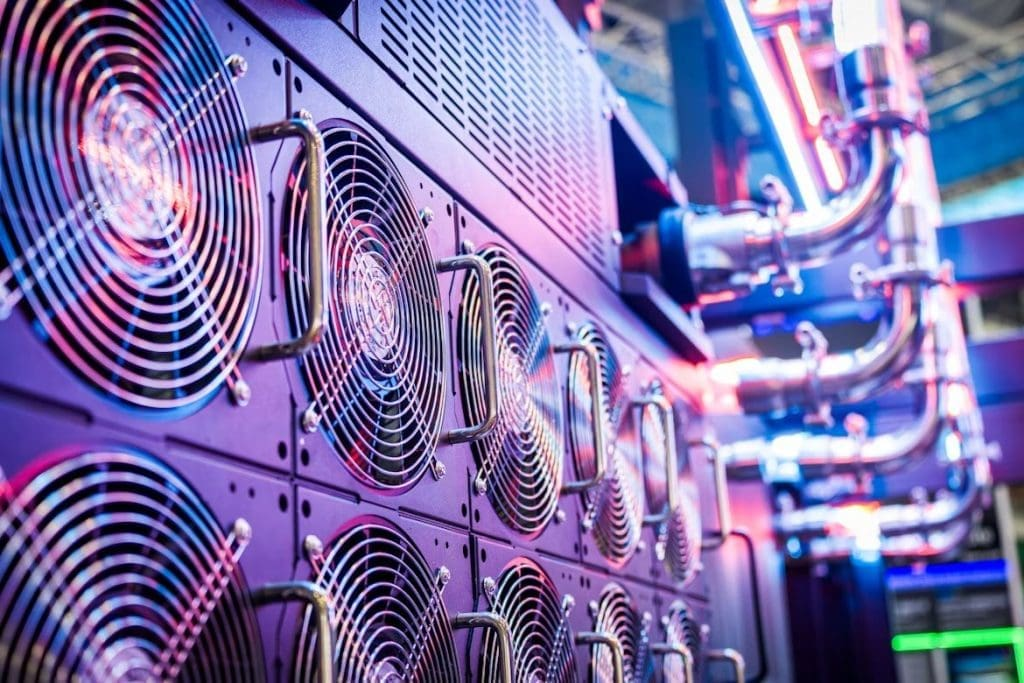
Running servers at scale requires a considerable amount of electricity, and cooling is a major part of data-center operations.
Thousands of sensors can monitor temperatures, airflow, humidity, power consumption, and equipment conditions throughout a facility. AI models can use this information to adjust cooling systems more dynamically.
Instead of relying on fixed settings, automated systems can respond to changing conditions and attempt to maintain the required temperature while reducing unnecessary energy consumption.
This is becoming increasingly important as global data-center demand grows.
The International Energy Agency projects that worldwide data-center electricity consumption will roughly double from around 485 TWh in 2025 to about 950 TWh by 2030, with AI-focused data centers growing even faster.
That creates an important distinction.
AI can make individual data centers more efficient, but the rapid growth of AI workloads can still increase total electricity demand. Improving efficiency therefore needs to happen alongside better infrastructure, power management, and capacity planning.
AI Support Is Useful, but It Has Limits
Customer support is another obvious area for automation.
Hosting companies receive large numbers of repetitive questions involving passwords, DNS records, email configuration, SSL certificates, domain settings, and other routine issues.
An AI assistant trained on a provider’s documentation can answer many of these questions immediately, including outside normal support hours.
For straightforward problems, that can be convenient.
The situation changes when a website is actually down or an unusual server-side problem requires someone with access to the infrastructure.
A chatbot cannot replace a technician who needs to inspect a server, change a configuration, restore a service, or investigate an account-specific failure.
This makes escalation particularly important.
A good support system should allow customers to move from automated assistance to a human technician when the issue falls outside the chatbot’s capabilities.
Before choosing a hosting provider, it is worth testing this yourself. Ask a question that is not covered by the provider’s standard documentation and see how easily you can reach a real support agent.
What to Ask Before Choosing an AI-Powered Host
AI features can look impressive on a hosting provider’s feature page, but the more important question is what happens when the automation makes a mistake.

Predictive scaling could allocate more resources than necessary, increasing costs.
A security system could mistake legitimate traffic for an attack.
An automated migration tool could fail to identify an unusual compatibility issue.
A support chatbot could misunderstand the problem and keep sending customers through the same automated responses.
These situations do not necessarily mean the technology is ineffective. They highlight the importance of having safeguards and human escalation available.
Before signing up with a hosting provider, ask a few practical questions:
- What happens if the AI scaling system overestimates traffic?
- Can customers override automated decisions?
- How are false security alerts handled?
- Can a customer quickly reach a human support agent?
- What happens if an automated migration fails?
- Does the provider explain how AI-powered systems use customer data?
The best AI implementation is not necessarily the one with the longest feature list.
For a hosting customer, the real value comes from automation that prevents problems, reduces routine work, and improves reliability without making it harder to get human assistance when something goes wrong.
Final Thoughts
AI is becoming part of almost every layer of modern web hosting.
Some applications are visible, such as AI website builders, migration assistants, and support chatbots. Others work almost entirely in the background, including predictive scaling, hardware monitoring, security analysis, and data-center optimization.
The biggest change is that hosting infrastructure is becoming increasingly proactive.
Instead of simply responding when a server becomes overloaded or a component fails, AI systems can analyze large amounts of operational data and identify potential problems earlier.
That does not mean human engineers are becoming unnecessary. In many cases, their role becomes even more important when automated systems encounter situations they cannot confidently handle.
For customers, the most useful AI may ultimately be the AI they never notice: the system that prevents an outage, prepares for a traffic spike, detects a failing component, or filters an attack before it reaches the website.